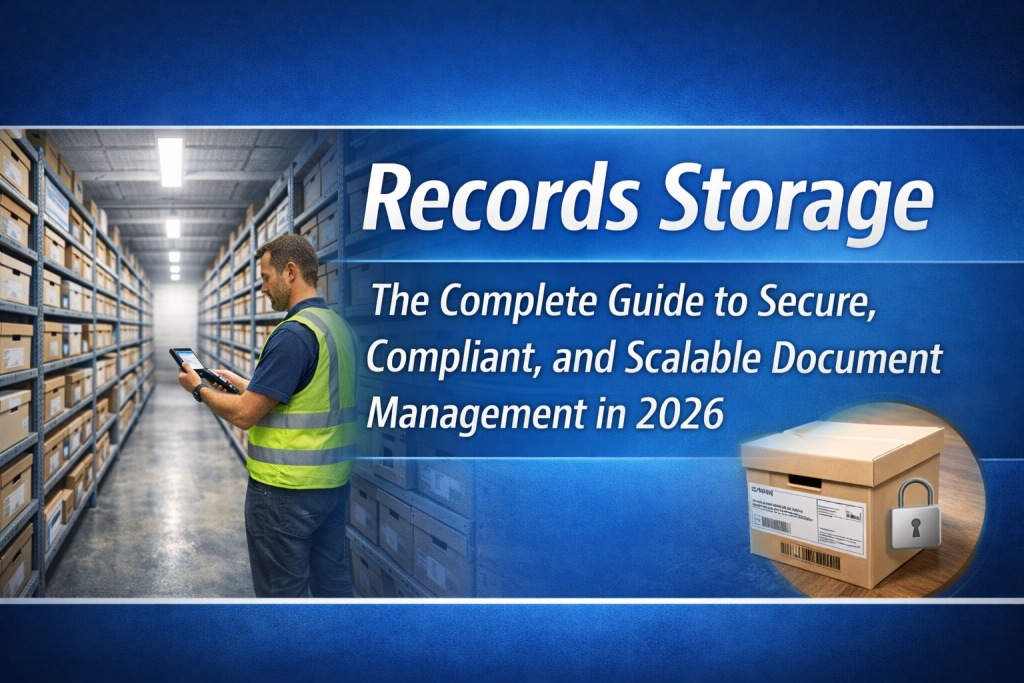
Introduction: Why Records Storage Is No Longer Just “Storage”
Records storage is no longer about placing boxes in a warehouse and locking the door.
In 2026, records storage sits at the intersection of compliance, risk management, operational efficiency, and business continuity.
Organizations that treat records as an afterthought expose themselves to legal risk, audit failures, data loss, and unnecessary costs.
This guide explains what modern records storage really means, why in-house storage fails at scale, and how professional records storage protects businesses today and in the future.
What Is Records Storage?
Records storage is the professional management of physical business documents throughout their lifecycle, including:
-
Inventory control and indexing
-
Controlled access and retrieval
-
Retention management
-
Certified destruction at end-of-life
Unlike simple warehousing, records storage is governed by policies, compliance standards, and documented chain-of-custody procedures.
Why In-House Records Storage Fails
Most organizations start by storing records internally: filing rooms, basements, unused offices, or rented apartments.
This approach almost always breaks down.
Common Risks of In-House Storage
-
No environmental controls (humidity, heat, dust)
-
No audit trail or access logs
-
High risk of loss, fire, or water damage
-
No scalability as records grow
-
Wasted office space and rising real estate costs
-
Human error and unauthorized access
What begins as a “temporary solution” quickly becomes an operational liability.
The Business Case for Professional Records Storage
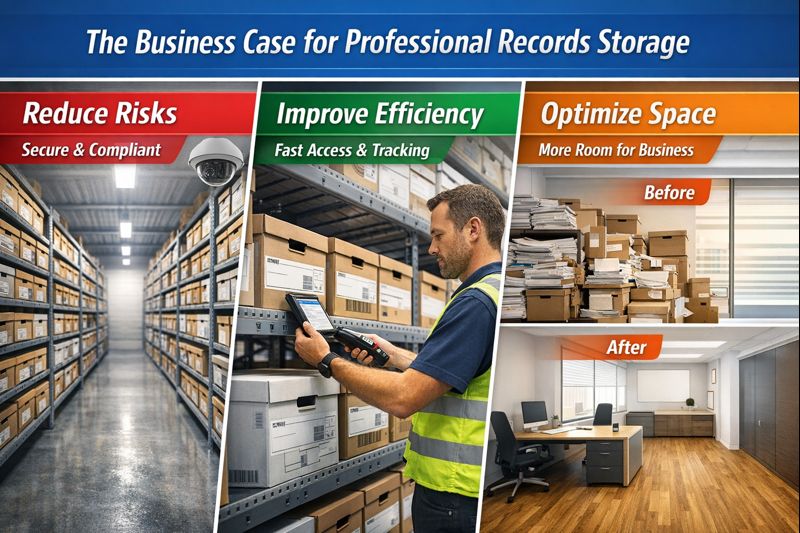 Professional records storage is not a cost center. It is a risk-reduction and efficiency investment.
Key Business Benefits
1. Regulatory Compliance
Professional providers operate according to documented standards that support audits, legal discovery, and industry regulations.
2. Security and Chain of Custody
Every record movement is logged, controlled, and traceable.
3. Space Optimization
Office space is reclaimed for revenue-generating activities instead of storage.
4. Predictable Costs
Clear per-box pricing replaces hidden internal storage expenses.
5. Business Continuity
Records remain protected and accessible even during disruptions.
How Modern Records Storage Works
A professional records storage system follows a structured workflow:
1. Intake and Preparation
-
Records are collected from the client site
-
Boxes are standardized and labeled
-
Metadata is captured (department, date range, retention category)
2. Secure Transportation
-
Controlled transport vehicles
-
Chain-of-custody documentation
-
Secure handover at the storage facility
3. Storage in Controlled Facilities
-
Climate-controlled environments
-
Fire suppression systems
-
24/7 monitoring and access control
-
Segregated storage zones
4. Inventory Management
-
Every box indexed in a centralized system
-
Searchable inventory
-
Real-time status visibility
5. Retrieval and Refiling
-
On-demand retrieval requests
-
Same-day or next-day delivery options
-
Secure refiling after use
6. Retention and Destruction
-
Retention schedules enforced
-
Certified shredding at end-of-life
-
Documented destruction reports
Records Storage vs. Document Scanning
A common misconception is that scanning replaces records storage.
In reality, they serve different but complementary purposes.
| Records Storage | Document Scanning |
|---|---|
| Preserves original physical documents | Creates digital access copies |
| Required for legal originals | Improves accessibility |
| Long-term retention | Operational efficiency |
| Compliance-driven | Workflow-driven |
Most mature organizations use both, not one instead of the other.
Industry-Specific Records Storage Needs
Different industries face different risks and compliance pressures.
Healthcare
-
Patient records retention
-
Legal and regulatory audits
-
Confidentiality and access control
Finance and Banking
-
Transaction records
-
Regulatory inspections
-
Long retention periods
Legal
-
Case files
-
Evidence integrity
-
Chain of custody
Construction and Engineering
-
Contracts
-
Drawings and permits
-
Long-term project documentation
Corporate Enterprises
-
HR files
-
Contracts
-
Tax and accounting records
Professional records storage adapts policies and workflows per industry.
What to Look for in a Records Storage Provider
Not all storage providers are equal.
A serious records storage partner should offer:
-
Purpose-built facilities (not generic warehouses)
-
Documented security procedures
-
Inventory and tracking systems
-
Clear retrieval SLAs
-
Transparent pricing
-
Compliance alignment
-
Certified destruction services
-
Proven operational scale
If a provider cannot clearly explain their process, that is a red flag.
The Future of Records Storage (2026 and Beyond)
Records storage is evolving, not disappearing.
Key trends:
-
Hybrid physical + digital strategies
-
Integration with ERP and compliance systems
-
Data-driven retention optimization
-
Increased regulatory scrutiny
-
Higher expectations for transparency and traceability
Organizations that invest early in structured records management will face fewer disruptions and lower long-term costs.
Final Thought
Records are not clutter.
They are evidence, history, and protection.
Treating records storage as a professional discipline is no longer optional for growing organizations.
It is a foundation for compliance, resilience, and operational clarity.